Thursday, November 1, 2018

Waltzing Through Fall

Last night, I took J trick-or-treating through Trinidad (along with E, for a bit, and Z for a bit longer). She was Eliza (from Hamilton!), but acquired vampire fangs (and a tiara) along the way, so quickly became vampire Eliza. It was a perfect mid-fall night. Dry, warm, leaves just starting to turn. The streets filled with old friends and flowing with candy. Per J, I'm strictly rationed to: (3) Kit Kat bars; (1) roll of smarties; and (1) mini-Butterfinger. Which is probably all I need anyway.

Things that have been rattling around the internet, etc. this week:

  • This piece on Outlaw Country in 33 Songs is amazing and detailed. And makes me think of Texas. The first time I heard Dallas in Tim's backyard. And now has me listening to a string of Jimmie Dale Gilmore songs at my desk. But the opening interview with Steve Earle is a lot of fun too. Money quote:

    Who do you think embody some of those outlaw principles these day?

    A lot of them are girls. Miranda Lambert’s last record is a fucking masterpiece. Women are being marginalized in country music more than ever, just because bro country thinks it’s such a dude thing. Women are reacting to it and they’re the best songwriters. A lot of it’s Brandy Clark. She’s in the middle of it all and she’s a badass.

  • I'm quite looking forward to going to the Hirshhorn (maybe lunch tomorrow?) to see the Pulse show! It seems like it could bear repeat visits...

  • I saw a free bluegrass show at Pearl Street Warehouse on Tuesday night. The band, Off the Rails, was fun and had a nice deep repertoire - from Hank Williams (Hey, Good Lookin'!) to Mandolin Orange (Waltz About Whiskey) to Sturgill Simpson (Long White Line). But the venue was a little slick and a little quiet (I mean, it was a Tuesday night). The waltzes were made for dancing two-step and the floor stayed empty. But, it was free, and the gumbo was truly delicious!

  • Yet another reason to go to NYC for art!

  • And, speaking of art, Dumbarton Oaks now opens at 11:30a! And starting today, the gardens (open at 2p), are free. May well be worth a bike ride over there..

  • This week Punch did a series on now-defunct bars. Even though I only went to the Mars Bar once, this piece is well-written and nicely captures what I remember about it.

  • No new Serial today! Which just means more time to re-listen to the last few episodes. It's truly amazing this year. And I'm somewhat surprised (but not really) that the response has been so muted. It seems like these conversations, explorations, are exactly what we should be highlighting right now.

Parents coming to town soon. Swimming and shed building and (hopefully) some more of these perfect fall days for rambling.

Friday, October 26, 2018

Salt & Sundry


Joan Mitchell, Salut Tom (1979)

A place to park some things that have been rambling around my brain the last few days. Connections. Words. Discoveries. Explorations.

A smattering:

  • Last night I watched the Oakland episode of Hip Hop Evolution. The biggest takeaways for me were (1) that I need to find some Too Short; (2) how the connections between the Panthers and dance and revolution made Oakland hip-hop a very special thing; (3) that Hammer's dancing is still just so much fun (and, somehow, connected directly to #2); (4) that Tupac was in Digital Underground [of Humpty Dance fame!] - somehow I'd never quite made that connection.

    Then I fell down an internet rabbit hole and learned that Tupac and Jada Pinkett (Smith) went to an arts High School together in Baltimore! Who knew?! Someone should make a movie about that. Though, there are probably 300 scripts along those lines already floating around.

  • The new Jason Isbell live album (despite a bad review from WaPo) has been on repeat for me lately. The opening lines of "Hope the High Road" dig deep. It was great to see him at Newport.. it'd be amazing to see him again.

  • Can't wait to finish re-watching the Wire - Season 4. This is a great article on how the Wire nailed public education. Is the Wire really that forgotten of a show?

  • Still rolling through "There There" - losing the thread a bit, but it's really a function of my lack of focus. There's some really incredible writing, rich characters, and buried narratives being unearthed here that make it well worth the read. I'm excited to see where Tommy Orange goes from here. It feels like White Teeth - a stunning debut which just promises much more ahead.

  • I'm really loving the LitHub decade-by-decade surveys of defining books. The 90's is up today and there's a lot I agree with - and a lot I'd quibble with. But we're now in a decade where I remember buying some of these books when they were new (Jhumpa Lahiri!). Very much looking forward to the next installments..
  • This Eileen Myles interview just kills me. She's so present, so funny, so alive.

    Suddenly things were very open. I don’t know what it was that I expected to be doing, but there I was. I wasn’t teaching, I didn’t have any commitments. And it was just really funny to be in this position where, at least for a time, I was experiencing New York City in an ideal way in my 60s that very much resembles me in my 20s, except that these days nobody else is living this way. But for this window of time, I was very free. I kind of had no schedule. I don’t remember being particularly broke. And I just wasn’t under any pressure. I was just in this expanse of time that not anybody I knew was in… and I was in the city. And it was funny. I wrote the poem “Evolution” out of that kind of lengthy, loose feeling. That characterized a lot of this work. I think that I write kind of seasonally in some way, and my poems always make me know about the curve of time.

  • The new Dylan Bootleg Series (at least based on the First Listen Sampler on NPR) is good - but nothing earthshaking. Greil is right - the Minneapolis sessions saved the album, myths aside.

  • And this new show at the Met on Armenia seems fascinating! Particularly after seeing a glimpse of Armenia at the Folklife Fest this year. A quick trip to NYC, soon, might be in order..

  • Caught the Diane Arbus (small!) show at the Smithsonian American Art Museum the other day. About a portfolio of 10 prints she was working on when she died. There was a reference to her address in an ad for the Portfolio, which I looked up and it led me to a fascinating story about how the old Bell Telephone Labs on the West Side became an artists community. And how the renovation was done by a young Richard Meier. Stories within stories. Always.

Friday, May 11, 2018

Thoughts on Books and Things

With the weather warming, and the backyard a mess of half-finished projects, I'm reading less. Even tired, curled with J for quiet reading at night, I look at my phone far longer than I should. And pick up a book only for the last 10 minutes or so. Maybe it's because Less hasn't fully grabbed me. It's a good palate-cleanser after Little Fires and Stephen Florida, but sometimes I want to dive into something deeper and older.

This write-up of Bowles and Sheltering Sky by Theroux caught my eye this morning and I've been chewing on it. A sense of restlessness. Heading south. The desert. I'd love to re-read it. Or the great white whale itself. Or Anna K.

And then there's Bolano (who I'm craving, particularly Savage Detectives, after hearing Rachel K talk about it at her reading on Monday). And Flamethrowers. Maybe after the new one I'll dive back into Reno's world. Ideally on a bus to NYC to see art.

Now playing: The National. On repeat.

PS - More from LitHub. The Fear / Responsibility / Boredom of Motherhood. (Or single-fatherhood, I suppose). The little one here is littler, but some of the feelings are the same.

Today I tried to explain to my daughter what “dead time” is: “There are moments when we do absolutely nothing, and life is full of those, my love.” She replied, “Who killed it?” I was going to say that what matters is not who killed it but how it was killed—but by then she’d already switched on the TV.

Wednesday, May 9, 2018

The Mars Room

Took a trip to P&P on Monday to see Rachel K read from her new book. She was splendid. Funny, present. And rolled with some ridiculous audience questions.

The Times review is out. I can't wait to dive in:

Rachel Kushner’s second novel, “The Flamethrowers,” instantly established her as one of the most gifted writers of her generation — on the same tier as Jennifer Egan and the two Jonathans, Franzen and Lethem. As the title suggests, it was a flamboyant book, brilliant to a point just short of showoffiness, and it somehow managed to fuse together sex, motorcycle racing, Italian labor strife and the New York art world of the 1970s. It made everyone’s Top 10 list, was a finalist for a 2013 National Book Award (I was one of the judges) and quickly got snapped up by the movies.

God, I loved the Flamethrowers. As the woman who introduced Rachel explained, it's like you remember scenes from the book as though they actually happened. To you. It gets that far under your skin.

Tuesday, October 3, 2017

Trouble No More

So I impulsively took a bus trip up to NYC to see Trouble No More last night. Left DC at 12:30p, read Commonwealth on a gorgeous blue-sky early-fall afternoon up through NJ. Had a quick dinner with BL (Thai in Chelsea, 5 tables, not good, not bad, just food and good conversation), then the C train up to Lincoln Center. It was a clear, cool night. Not cold. Just perfect. I queued up in line with my book, remembering why I was always able to finish so many books when I lived in NYC.

I was early enough in line that when they opened the doors I got great seats. It started a little late, a speech from the director. A shout out to Jeff Rosen (seated a few rows up from me). And then the lights came down.

I wasn't sure what to expect. I knew it wasn't a concert film - but had concert footage. I vaguely knew that Luc Sante had written "sermons" for the film. And I knew it was short (an hour). But that was it.

A quick trip.. #gospeldylan. @thenyff

A post shared by Ben (@lonesomeace) on

So the lights went down and the film opened with a shot of a door. And then the camera moved through it and upstairs and we're in a rehearsal studio in LA in 1980, with Bob and that amazing band (and choir) running through a rough, ragged, slightly aggressive version of Jesus Met the Woman at the Well, that old traditional gospel song he did so well in the 60's -- reborn here. The camera is tight, the band is sweating, and it feels alive.

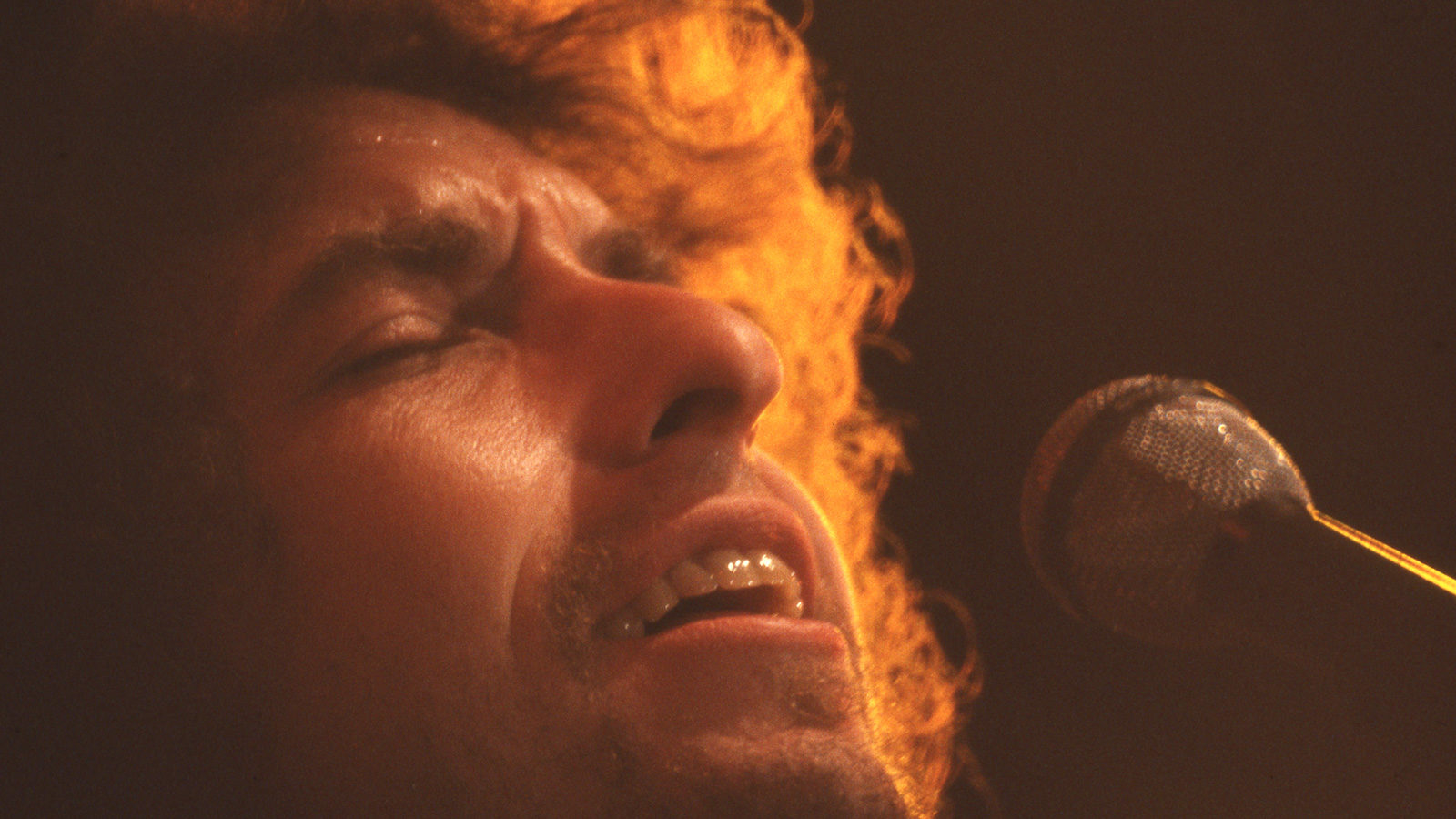
From there we jump to concert footage that I'd never seen (Buffalo '80?). Dylan looking somewhat tired, the stage small, the crowd pressed in tight. I'd forgotten these were theater-sized shows. But the band is on fire - and his voice is alive and urgent. And the way he moves. Throws his head to the side between lines. Captivating.

Then he walks off stage as the band keeps playing and the film neatly segues to Michael Shannon playing a 30's preacher, walking into a church, and giving a sermon - on removing the plank from your eye before pointing out the mote in your neighbor's eye - a standard text. But I found the delivery compelling. Having grown up hearing sermons like these, they ring true. But they also fit the film. They're plain-spoken, simple, but not condescending.

This rhythm keeps up through the film. Some amazing performances - Solid Rock, Pressing On, Ain't Gonna Go to Hell for Anybody, What Can I Do For You?, Precious Angel - interlaced with sermons. Some better than others. Some performances better than others. Generally fitting in the theme. And then, over the closing credits, a real treat - Bob and Clydie King rehearsing Abraham, Martin, and John. A perfect way to bring it all together.

All in all, somewhat to my surprise, I thought it worked incredibly well. It seemed as though they had a pile of 79-80 footage and weren't sure what to do with it. And they had two easy options and a third, more-interesting, option. The easy ways out would have been to do a full concert film of, say, Toronto (either 80 or 81 - or both) - 1-2 hours of pure music. Or they could have done a narrative-style No Direction Home type piece - telling the story of the Gospel Era with some combination of music and interview and voice-over.. But this approach worked even better, I think, and I'm glad they went with it.

And yes, we could quibble for days / months / years about what was left out and why (both here and in the box set). No Tucson '79. No New Orleans '81 (that Lanois mixed!). But I'm incredibly grateful that this exists at all. It was worth the bus ride. I missed the Q&A, alas, to catch the 11p bus back to DC, falling asleep almost instantly, feet dangling across the aisle. Out cold all the way home..

Thursday, May 25, 2017

Thoughts on American Epic - Episode 2 - Blood and Soil

After the disappointment of Episode 1, I didn't have particularly high hopes for the rest of the American Epic series. It seemed trite, half-baked. Simplified.

But, well. A lot can change in an hour. The second episode - Blood and Soil was tremendous. It dug in deep and got it. Let the music speak for itself, and made genuine connections (mostly) - showing how these slices of vernacular music captured (magically!) by record companies in the 20's reached far and wide.

Elder J.E. Burch

The first segment was anchored, neatly, in the sanctified church movement of the early 20th century (who can forget the Cotton Top Mountain Sanctified Singers?) - and looked smartly forward and backwards from there.. The role of preacher records, gospel music - all centered around Elder J.E. Burch and the quiet fervor of "My Heart Keeps Singing."

The filmmakers actually show the work - dig in the archives. Travel to Cheraw, SC. And talk to people who knew Burch. (They could do more of this - the story of the search).

Connections are nicely made to the civil rights movement, and Aretha Franklin and Dizzie Gillespie (who grew up next door to Burch!). Nimbly, niftily done. And letting Sister Rosetta Tharpe's Up Above My Head roll for a while at the opening? Spot-on. It frames the whole section perfectly - old and new; secular and spiritual; sensual and gospel and political and oh so powerful.

And, blissfully, no celebrities pontificating.

Coal Country

Just hearing the opening chords of Henry Lee made me smile, deeply. We're firmly on Anthology territory. This segment focused on Logan County - the land of Dick Justice and Frank Hutchison. Some great footage of the mines (including a great juxtaposition at the end of mine cars full of workers matched against an engineer in a lab coat watching a record get cut). Excellent discussion of music as a hobby - and a quick (too quick!) mention of the battle of Blair Mountain and Union struggles.

Could have used a bit more discussion of the connections between this music and the blues - the cross-cultural, cross-regional pollination - the broad range of song styles and traditions. It could have gone deeper into the connections between music and labor struggles. And it could have used a bit more on how these folks were "discovered" by the record companies - and how they saw making records. But these are quibbles, really. We're blissfully spared the Episode 1 nonsense about the Carter's being some sort of purist hillbilly music monks.

Notably this segment includes the first mention of the Anthology. It's well out of scope - but this story could be told again from the other side - from the perspective of the Blues Mafia and that wave of white college kids who went south to "rediscover" this old music. And the canonization of those discoveries in things like the Anthology.. But another time, another film (or book!).

Also, Springsteen doing John Henry did very little for me. I mean, I love the man dearly. But why was this tacked on here?

Dockery

Probably the best segment yet. The opening was simply brilliant. May 1965. Shindig. Mick Jagger doing Red Rooster, transitioning to Brian Jones introducing Howlin' Wolf.

Then on to archival footage of Dockery with Wolf describing Patton. A line drawn through time in a great, simple, set of segues.

And then we're deep into the legend of Patton. As a friend pointed out, more could have been done with the poetry of his lyrics (see Chapter 2 of Robert Palmer's Deep Blues - Heart Like Railroad Steel) or their context as laid out in Elijah Wald's excellent piece . But there's plenty to love here from the lengthy clips (High Water!) and the interviews with those who knew him. The biggest thing I got from the interviews was just how key the role of working with mules in the fields was - to the lope of the rhythm, to the roughness of the voice. Lots of great stories about Patton's showmanship - he was an Elvis. A Jerry Lee. Playing the guitar with his teeth, behind his back. On the ground, kicking dust in the air.

And the links forward were nicely done - to Son House (that footage of him doing Death Letter!) and Robert Johnson and the world. All neatly placed into the context of Dockery Farm - a way of life with its roots before the Civil War.

Simply amazing footage. And hearing Robert Lockwood cover Robert Johnson's immortal Love in Vain reminded me how that song is about the best 2:20 imaginable:

When the train, it left the station, was two lights on behind
Well, the blue light was my blues, and the red light was my mind.
All my love's in vain.

And again, no celebrities in sight. Thank g-d.

Next week looks to cover the field - Cajun and Hawaiian and who knows what else. I've ordered the Book (apparently it's quite helpful for context - and reams of unpublished interviews). I may be along for the ride despite myself...

Thursday, May 18, 2017

Thoughts on American Epic - Episode 1

So I was taken a bit by surprise by the launch of American Epic. Apparently it's been in the works for years - but I've been out of the Old Time circles, alas.

And I was pretty excited - finally, a chance to see pre-war music get a shot in the public eye! The magic, the mystery. That incredible moment when the music industry met vernacular music on its own terms - and captured the diversity and depth that was out there far better than well-meaning folk song collectors like Lomax were able to. Charlie Patton and Geeshie Wiley. Washington Phillips and Blind Willie Johnson. Skip James. Furry Lewis. All recorded commercially. All sublime.

And maybe, just maybe, Robert Redford and Jack White and T Bone could conjure some of that up - put it in context, and show why it mattered. Where it came from and how it grew. And what it tells us about the intersections, the seams, in our fabric.

And. Well. They tried. There's a lot to like in Episode 1. Split between the Carter Family and the Memphis Jug Band - they let the songs roll where appropriate (instead of just short clips). There's some great old footage - particularly of the record cutting machines. And the story of Peer going to Bristol to record is well told.

[First, though, a confession. I've never really liked the Carter Family. I get why they're important. But I find the fingerpicking repetitive and dull. And, aside from say Single Girl, I never really connected with the songs emotionally. Certainly not the same way I do when hearing Clarence Ashley or Bascom Lamar Lunsford or Frank Hutchison. Heresy, I know. And I don't care.]

That aside though, it makes sense to start the story with the Carters. In Bristol. But the story they tell is full of banal cliches. At one point Redford actually says: "Though poor in material goods, the mountain folk are rich with tradition. And none more than the Carter Family." What does that even mean? They were the poorest? The richest with tradition? Whatever they were, they didn't just appear. Where's the story of where this music came from? The mash-up of british isle murder ballads and the blues? Ghosts and vegetables and death?

Later, there's an assertion along the same lines - that the Carters had "no influences." Really!? All while failing to mention Leslie Riddle - A.P. Carter's African-American friend and fellow song-collector (who taught Maybelle her finger-picking technique). There's a great story to tell here - how A.P. pulled together and synthesized a wide range of song styles (and then took credit for them). But that's not in here.

There's a certain treacly nostalgia that creeps in. Assertions the Carters were "about music and not about money" (noting they didn't charge widows and orphans to see their shows) - when A.P. drug his pregnant wife from rural Virginia to Bristol to get a shot at a record deal? The list goes on.

So, do things improve with the Memphis Jug Band? Yes and no. Jug band music is dealt with as a fully-formed thing - without discussion of where it came from, or that it existed well beyond Memphis. Will Shade is given some well-deserved attention. There's some good discussion about how bands like the MJB played a bit of everything from Broadway showtunes to blues, but not nearly enough.

But then Nas - and Redford as narrator - keep repeating more cliche banalities - this time about the crime and violence and danger of Memphis in the 20's. And it's as false a fetishization as the spin on the Carters. The clip of Nas covering "On the Road Again" is interesting - but what does it really do to help us understand the jump from pre-war blues to Illmatic?! Or is it just a teaser for the separate film / concert / video / CD / stream of the "American Epic Sessions"? I blame T. Bone Burnett (his soundtrack to the concert for the film of Inside Llewyn Davis is pure hucksterism. No matter how good Rhiannon's performance was). [But I can't stay mad. T Bone will always have a spot in my heart for Rolling Thunder 76. Always.]

The preview for next week mentions Charlie Patton. I'm holding my breath. There's real magic possible here - a world just waiting to be put into context and explored with actual intellectual depth and rigor. Amazing, explosive stories about how our country came together (and didn't, and haven't). Stories of Love & Theft. And they're waiting to be told. Still.